

An Unfinished Life
 While JFK remains the subject of
endless media attention and national fascination more than 40 years after his assassination, Dallek's book provides fresh revelations and perspective.
While JFK remains the subject of
endless media attention and national fascination more than 40 years after his assassination, Dallek's book provides fresh revelations and perspective.
Author : Robert Dallek
ISBN-13 : 9780316907927
Publisher : Little, Brown & Company
Publication date : 07/04/2004
Meet the Author
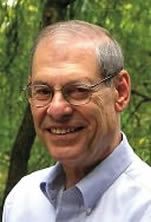 Robert Dallek is the author of the number one bestseller An Unfinished Life: John F. Kennedy, 1917-1963, among other books. His writing has appeared in The Atlantic Monthly, The
New York Times, and The Washington Post. He is an elected fellow of the American Academy of Arts and Sciences and of the Society of American Historians, for which he served as president in
2004-2005. He lives in Washington, D.C.
Robert Dallek is the author of the number one bestseller An Unfinished Life: John F. Kennedy, 1917-1963, among other books. His writing has appeared in The Atlantic Monthly, The
New York Times, and The Washington Post. He is an elected fellow of the American Academy of Arts and Sciences and of the Society of American Historians, for which he served as president in
2004-2005. He lives in Washington, D.C.
Interviews & Essays - An Interview with Robert Dallek
Barnes & Noble.com: What made you decide to write JFK: An Unfinished Life?
Robert Dallek: I like to think of myself as working on the frontiers of presidential scholarship. I went to LBJ before JFK because more material was available. [In terms of reputation,] LBJ has
nowhere to go but up, but JFK has nowhere to go but down. When I finished LBJ, I got access to new
medical material on JFK. Also, I saw the RFK confidential file. People said to me "Oh, your book is
the definitive work on JFK." But I always keep in mind the comment of one historian who said, "History
is argument without end." There are no definitive books on any of these subjects. You are sure to see more books on John Kennedy.
Although I got the medical records from the family, I did not interview any family members. I do not think it would be a good idea to talk to the family. I describe the cover-up of the medical
history of Jack. I reveal that Kennedy had an affair with a 19-year-old intern while he was president. I do have a favorable view of him but do not whitewash the man. I have not suppressed the
flaws or limitations of the man.
B&N.com: What influence did Kennedy's growing up in a large, competitive Catholic family have on
him?
RD: His family's influence was particular. Especially from his father, who was determined to scale the heights, so to speak. The father accumulated one of the great fortunes in business history.
He wanted to demonstrate to the Brahmins in Boston that he could be as successful as they were. Jack imbibed these lessons. Also, that no Kennedy child was going to be indolent. Although there
was plenty of self-indulgence, there was a work ethic and an emphasis on achieving. He was in competition with his brother, Joe Jr., who died in the war. Joe wanted a son to be president and Jack
rose to the challenge despite being a sickly child. It would have stopped 99.99 percent of people in their pursuit of the presidency.
B&N.com: How did Jack's illnesses affect his performance as president?
RD: He gave press conferences and speeches on the Bay of Pigs, Berlin Crisis, and civil rights tempests. And now that we can listen to the tapes from the Oval Office -- we see him as the leader.
He is making the judgments, acting in commanding ways, and if it weren't for the medicines, I do not know that he would have been able to act in such a way.
I had access to his medical records, to material not seen before. He had quite a few illnesses. As a boy, he had spastic colitis. He was sent to the Mayo Clinic. In 1937, they gave him steroids
-- very expensive -- for colitis. It apparently helped to rein it in but caused him to have osteoporosis of the lower back and caused the shutdown of his adrenal glands, causing Addison's
disease. He couldn't pull his shoes and socks off his feet. He also had sinusitis. He had prostatitis, which was an inflammation. He was on testosterone to keep his weight up. The other
medications pushed his cholesterol up.
He was on so many medications. I studied the various crises he passed through as president. I took the Cuban Missile Crisis and found out he was as lucid as you could hope anyone could be. But if
it weren't for the medicine, I do not think he could have performed as well as president.
B&N.com: Did he suffer from depression at all?
RD: He was under stress, and as a result he was given additional doses of hydrocortisone. The point is, there were sweeping medications he took, such as stellazine, which was thought of as an
antipsychotic but also was a mood elevator. But he did not suffer from clinical depression.
B&N.com: Should he even have served as president?
RD: If it were known that he was as ill as he was, he would not have been president. There was a cover-up about his medications and illnesses. He was going to be the first Catholic president.
B&N: Should there be some kind of physical exam for men and women seeking the presidency?
RD: We are entitled to the privacy of our medical records -- except for presidents. They do have their fingers on the nuclear trigger. One would like to think the public would be more
understanding about illnesses like depression. We need to be more tolerant of the physical and emotional limitations that these men and women suffer. After all, they are not God.
B&N: How do you rate John F. Kennedy as president?
RD: The American public rates President Kennedy as one of the great presidents of American history.
And in the USA Today poll taken about a month ago, Lincoln was the greatest president and Kennedy No. 2. Historians are more critical. I have seen him in the top 15 among historians. Washington,
Lincoln, and FDR are the greatest. I rank him somewhere in the front ranks. Events of the 1,000 Days
were very important. War and peace, civil rights, Medicare, federal aid to education -- JFK deserves
high marks. He deserves to belong in the top 10.
He saved us from nuclear war. If he had lived, he would have passed vital domestic legislation for a tax cut, the war on poverty, and HUD. These measures were passed on to Johnson, but Kennedy
initiated them.
B&N.com: What are some of Kennedy's other accomplishments?
RD: JFK was a war hero, and deservedly so. Even with his illnesses, he passed the Navy physical. One
could say he didn't accomplish much in the House except get elected to the Senate. He also established himself to be a candidate for vice president in '56.
B&N.com: What was your view of how JFK handled the Cold War?
RD: He understood the dangers of nuclear war. His greatest accomplishment was reining in the possibility of nuclear war during the Cuban Missile Crisis.
B&N.com: Do you think he would have escalated the war in Vietnam and increased the American military presence there?
RD: I don't think Kennedy ever would have escalated the war in Vietnam. He had a visceral aversion to
putting more troops into Vietnam. Yes, he increased the number of military advisers. But he was laying plans to get troops out by 1965. He didn't think America could do the job for the South
Vietnamese.
B&N.com: What will your next project be?
RD: I am going to write a book on Nixon and Kissinger. It will again put me on the frontier of presidential scholarship.
/http%3A%2F%2Fwww.memoiresdeguerre.com%2Farticle-an-unfinished-life-112531820.html%26Rdt%3DOn)